CASE STUDY (Experimental Based – 5 MARKS) Questions
Case Study 1:
During a laboratory demonstration, a teacher heated lead nitrate crystals in a test tube. Brown fumes evolved, a yellow solid remained, and the gas turned moist litmus paper acidic.
Answer the following:
Q1. Identify the type of reaction.
Answer: Thermal decomposition reaction.
Q2. Write the balanced chemical equation.
Answer:

Q3. What are the brown fumes and yellow residue?
Answer:
Brown fumes –  gas;
gas;
Yellow residue – PbO
Q4. Why does litmus paper turn red?
Answer:
Because dissolves in water forming nitric acid (HNO₃), which is acidic.
Q5. Classify each product formed as element or compound.
Answer:
- PbO– Compound
- – Compound
 – Element
———————————————————————————————————-
Case Study 2: Rusting of Iron and Prevention
Read the passage carefully and answer the following questions:
Iron articles like gates, railings, and bridges slowly get covered with a reddish-brown flaky substance when exposed to moist air. This process is called rusting and is a type of oxidation reaction. It requires both air (oxygen) and water (moisture). To prevent rusting, protective coatings such as oiling, painting, or galvanisation (zinc coating) are used.
(a) Which type of chemical reaction is rusting?
Answer: Rusting is an oxidation reaction, as iron combines with oxygen in the presence of water to form hydrated ferric oxide.
(b) Write the balanced chemical equation for rust formation.
Answer:

On dehydration, it forms 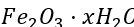 (rust).
(c) Why does rusting occur faster in coastal areas?
Answer: In coastal areas, high humidity and presence of salt increase the rate of rusting because moist salty air acts as a better electrolyte.
(d) Mention two methods used to prevent rusting.
Answer:
- Painting or Oiling – prevents air and moisture contact.
- Galvanisation – coating iron with zinc to prevent oxidation.
(e) Galvanisation is an example of which type of protection?
Answer: Galvanisation is a sacrificial protection method, as zinc reacts preferentially and protects the iron surface from rusting.
———————————————————————————————————-
Case Study 3: Heating of Copper Sulphate Crystals
Blue coloured copper sulphate crystals contain water of crystallisation. When heated strongly, they lose their blue colour and turn white. When water is added again, the blue colour reappears.
(a) What is the blue colour of copper sulphate due to?
Answer: The blue colour is due to water of crystallisation in 
(b) Write the chemical equation for the reaction when copper sulphate is heated.
Answer:

(c) What type of reaction is this?
Answer: This is a decomposition reaction, where a single compound (hydrated salt) breaks into anhydrous salt and water.
(d) What happens when water is added back to anhydrous copper sulphate?
Answer: The white anhydrous salt absorbs water and turns blue again, forming hydrated copper sulphate crystals.
(e) Which property of chemical reactions does this demonstrate?
Answer: It demonstrates reversibility and shows that physical appearance changes due to chemical changes involving water of crystallisation.
———————————————————————————————————-
Case Study 4: Reaction Between Iron and Copper Sulphate
When an iron nail is dipped in a blue solution of copper sulphate for some time, the blue colour fades and a reddish-brown deposit forms on the nail.
(a) Write the balanced chemical equation for the reaction.
Answer:

(b) Which element is displaced and why?
Answer: Copper is displaced because iron is more reactive than copper and can replace it from its compound.
(c) What type of chemical reaction is this?
Answer: It is a displacement reaction.
(d) What change is observed in the colour of the solution?
Answer: The blue colour fades as  changes to green
(e) What type of energy change occurs in this reaction?
Answer: It is an exothermic reaction, as heat is released when Fe displaces Cu.
———————————————————————————————————-
Case Study 5: Thermal Decomposition of Calcium Carbonate
Calcium carbonate (CaCO₃) decomposes on heating to produce calcium oxide (quicklime) and carbon dioxide gas. Quicklime is used in cement and also reacts vigorously with water to form slaked lime.
(a) Write the balanced chemical equation for the decomposition of calcium carbonate.
Answer:

(b) What type of reaction is this?
Answer: It is a thermal decomposition reaction.
(c) What happens when water is added to calcium oxide? Write equation.
Answer:

The reaction is exothermic.
(d) State two uses of quicklime.
Answer:
- Used in manufacture of cement.
- Used for neutralising acidic soil.
(e) Identify the reactions as endothermic or exothermic.
Answer:
- Decomposition of CaCO₃ → Endothermic (heat absorbed).
- Reaction of CaO with water → Exothermic (heat released).
———————————————————————————————————-
Case Study 6: Photosynthesis and Respiration – Opposite Reactions
Plants prepare their food by photosynthesis, which uses sunlight to convert carbon dioxide and water into glucose and oxygen. Animals use the oxygen to break down glucose into carbon dioxide and water during respiration.
(a) Write the chemical equation for photosynthesis.
Answer:

(b) Write the equation for respiration.
Answer:

(c) Which reaction is endothermic and which is exothermic?
Answer:
- Photosynthesis → Endothermic (absorbs sunlight)
- Respiration → Exothermic (releases energy)
(d) What type of relationship exists between these two reactions?
Answer: They are opposite (reverse) reactions of each other.
(e) Which of the two reactions helps in maintaining the balance of oxygen and carbon dioxide in nature?
Answer: Both photosynthesis and respiration together maintain the natural balance of oxygen and carbon dioxide.
———————————————————————————————————-
Case Study 7: Electrolysis of Water
Read the passage carefully and answer the following questions:
When electric current is passed through acidified water, it decomposes into hydrogen and oxygen gases. This experiment demonstrates the decomposition of a compound by electricity. The gases can be tested by the burning splint test.
(a) What type of reaction is this?
Answer: It is a decomposition reaction, more specifically an electrolytic decomposition.
(b) Write the balanced chemical equation for the reaction.
Answer:

(c) What is observed at the cathode and anode?
Answer:
- Cathode: Hydrogen gas is released.
- Anode: Oxygen gas is released.
(d) How can we test the evolved gases?
Answer:
- Hydrogen: Burns with a pop sound.
- Oxygen: Rekindles a glowing splint.
(e) What is the ratio of volumes of hydrogen and oxygen formed?
Answer: Ratio of 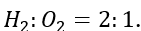
———————————————————————————————————-
Case Study 8: Corrosion of Copper
Copper vessels, when exposed to air and moisture, develop a green layer on their surface. This layer protects the metal from further corrosion. The layer consists of basic copper carbonate.
(a) Name the green layer formed on the surface of copper.
Answer: The green layer is basic copper carbonate 
(b) Write the chemical equation for this reaction.
Answer:

(c) What type of reaction causes corrosion?
Answer: It is an oxidation reaction.
(d) Why doesn’t the corrosion of copper spread deeply like rusting of iron?
Answer: The green layer is insoluble and protective, preventing further corrosion of copper underneath.
(e) Mention one method to clean the corroded copper vessel.
Answer: Clean using acidic solutions like lemon juice or vinegar, which dissolve the basic layer.
———————————————————————————————————-
Case Study 9: Combustion of Magnesium Ribbon
When a clean magnesium ribbon is burnt in air, it burns with a dazzling white flame, forming a white powder called magnesium oxide. This reaction demonstrates combination and oxidation.
(a) Why is magnesium ribbon cleaned before burning?
Answer: To remove the thin layer of magnesium oxide formed due to atmospheric oxidation, ensuring better combustion.
(b) Write the balanced chemical equation for the reaction.
Answer:

(c) What type of chemical reaction is this?
Answer: It is a combination reaction as two elements combine to form one compound.
(d) Is the reaction exothermic or endothermic?
Answer: It is exothermic, as bright light and heat are released.
(e) State one application of magnesium oxide formed in this reaction.
Answer: Magnesium oxide is used as a refractory material in furnaces and as an insulator in electrical equipment.
———————————————————————————————————-
Case Study 10: Reaction Between Baking Soda and Vinegar
When baking soda (sodium bicarbonate) reacts with acetic acid (vinegar), it produces carbon dioxide gas, water, and sodium acetate. This reaction is often used in volcano models and cleaning purposes.
(a) Write the balanced chemical equation for the reaction.
Answer:

(b) What type of reaction is this?
Answer: It is an acid-base reaction and a double displacement reaction.
(c) What evidence shows that a gas is evolved?
Answer: Effervescence (bubbling) is observed due to CO₂ gas release.
(d) How can you test the evolved gas?
Answer: Pass the gas through lime water; it turns milky due to formation of calcium carbonate.
(e) Is the reaction endothermic or exothermic?
Answer: It is endothermic, as it cools the surroundings slightly.
———————————————————————————————————-
Case Study 11: Decomposition of Lead Nitrate
When lead nitrate crystals are heated, they decompose to form lead oxide, nitrogen dioxide, and oxygen. This is an example of thermal decomposition.
(a) Write the balanced chemical equation for this reaction.
Answer:

(b) What are the observations made during the reaction?
Answer:
- Brown fumes of NO₂ evolve.
- Yellow residue of PbO remains.
(c) What type of reaction is this?
Answer: Thermal decomposition reaction.
(d) Is the reaction endothermic or exothermic?
Answer: Endothermic, as heat is required for decomposition.
(e) What does this reaction prove about the effect of heat on unstable compounds?
Answer: It proves that heat breaks down unstable compounds like nitrates into simpler and more stable products.
———————————————————————————————————-
Case Study 12: Reaction Between Zinc and Hydrochloric Acid
When zinc granules are added to dilute hydrochloric acid in a test tube, bubbles appear on the surface of zinc. The gas evolved burns with a pop sound when a burning splint is brought near it. The colourless solution formed is zinc chloride.
(a) Write the balanced chemical equation for this reaction.
Answer:

(b) What type of reaction is this?
Answer: Displacement reaction, as zinc displaces hydrogen from acid.
(c) How can the evolved gas be tested?
Answer: Bring a burning splint near the mouth of the test tube — it burns with a pop sound, confirming hydrogen gas.
(d) Is the reaction exothermic or endothermic?
Answer: It is an exothermic reaction; heat is released.
(e) What would happen if copper granules were used instead of zinc?
Answer: No reaction occurs, since copper is less reactive than hydrogen and cannot displace it from HCl.
———————————————————————————————————-
Case Study 13: Reaction of Silver Nitrate with Sodium Chloride
When solutions of silver nitrate and sodium chloride are mixed, a white insoluble substance immediately forms, and the solution becomes cloudy. This solid is silver chloride.
(a) Write the balanced chemical equation for the reaction.
Answer:

(b) What type of reaction is this?
Answer: Double displacement reaction and also a precipitation reaction.
(c) What is the white precipitate formed?
Answer: Silver chloride (AgCl) is the white precipitate.
(d) Write one property of the precipitate.
Answer: Silver chloride is photosensitive and turns grey on exposure to sunlight due to decomposition:

(e) What type of reaction is the above photochemical decomposition?
Answer: Photochemical decomposition reaction.
———————————————————————————————————-
Case Study 14: Exothermic Reaction in Daily Life – Slaked Lime Formation
When quicklime (CaO) reacts with water, slaked lime (Ca(OH)₂) is formed with release of a large amount of heat. This reaction is used in whitewashing.
(a) Write the balanced chemical equation.
Answer:

(b) What type of reaction is this?
Answer: Exothermic and combination reaction.
(c) What change is observed during the reaction?
Answer: The mixture becomes hot and swells up.
(d) How is this reaction useful in whitewashing?
Answer: Slaked lime reacts with CO₂ in air to form calcium carbonate, giving a smooth white finish:

(e) What does this reaction demonstrate about energy change in chemical reactions?
Answer: It shows that chemical reactions can release heat energy to the surroundings.
———————————————————————————————————-
Case Study 15: Reaction Between Sodium and Water
When small pieces of sodium are added to water, they react vigorously with fizzing and heat generation. Hydrogen gas evolves and sodium hydroxide solution forms. The reaction is highly exothermic and may even ignite the hydrogen gas.
(a) Write the balanced chemical equation for the reaction.
Answer:

(b) What type of reaction is this?
Answer: Displacement reaction and exothermic in nature.
(c) What precaution should be taken during this experiment?
Answer: Sodium should be added in small pieces, and the experiment should be conducted carefully under supervision, as the reaction is violent.
(d) Why does the solution formed turn soapy?
Answer: Due to formation of alkaline NaOH, which feels slippery and soapy.
(e) What will be the effect of using potassium instead of sodium?
Answer: The reaction becomes more vigorous and explosive, since potassium is more reactive than sodium.
———————————————————————————————————-
Case Study 16: Respiration – A Redox Reaction
Respiration is a vital process in living organisms where glucose reacts with oxygen to produce carbon dioxide, water, and energy. This process occurs inside cells and involves oxidation and reduction reactions simultaneously.
(a) Write the balanced chemical equation for respiration.
Answer:

(b) Identify the oxidation and reduction parts of the reaction.
Answer:
- Oxidation: Glucose is oxidised to CO₂.
- Reduction: O₂ is reduced to H₂O.
(c) What type of reaction is respiration?
Answer: Exothermic redox reaction.
(d) Why is respiration considered a redox reaction?
Answer: Because in respiration, oxidation of glucose and reduction of oxygen occur at the same time.
(e) What is the importance of this reaction for living organisms?
Answer: The energy released is used by cells to perform vital life processes like movement, growth, and repair.
———————————————————————————————————-
Case Study 17: Predicting Products and Type of Reaction
A student performed four different reactions as shown below:
| Reaction | Reactants | Observation |
| (i) | Mg + 2HCl | Gas bubbles observed |
| (ii) | 2AgNO₃ + Cu | Blue solution becomes colourless, reddish deposit forms |
| (iii) | CaCO₃ (on heating) | Gas evolved turns lime water milky |
| (iv) | Fe + S (heated strongly) | Black solid forms |
(a) Identify the type of reaction in each case.
Answer:
(i) Displacement (Mg + 2HCl → MgCl₂ + H₂)
(ii) Displacement (Cu displaces Ag)
(iii) Decomposition (CaCO₃ → CaO + CO₂)
(iv) Combination (Fe + S → FeS)
(b) Which reaction involves oxidation and reduction simultaneously?
Answer: (ii) Redox reaction, as Cu is oxidised and Ag⁺ is reduced.
(c) Write the balanced chemical equation for (iii).
Answer:
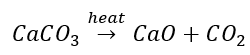
(d) Which reaction releases a gas that turns lime water milky?
Answer: Reaction (iii) – the gas is CO₂, which forms CaCO₃ with lime water.
(e) Which reaction is exothermic?
Answer: Reaction (iv) – formation of FeS releases heat (combination reaction).
———————————————————————————————————-
Case Study 18: Change in Rate of Reaction
A chemistry teacher adds small zinc granules into two test tubes:
- Test Tube A: contains cold dilute HCl,
- Test Tube B: contains warm dilute HCl.
Bubbles of hydrogen gas are observed in both, but in B, they appear much faster.
(a) What is the common gas evolved in both tubes?
Answer: Hydrogen gas (H₂).
(b) Write the balanced chemical equation for the reaction.
Answer:

(c) Why are bubbles formed faster in the warm acid?
Answer: Increasing temperature increases reaction rate, causing hydrogen to evolve faster.
(d) What will happen if the acid is made concentrated?
Answer: The reaction becomes too vigorous, releasing hydrogen rapidly.
(e) What general conclusion can be drawn about the effect of temperature on reaction rate?
Answer: Higher temperature increases the rate of reaction by providing more activation energy.
———————————————————————————————————-
Case Study 19: Identification of Unknown Reaction
A student added two colourless solutions — Solution X and Solution Y.
A white precipitate immediately appeared, which turned violet on exposure to sunlight.
Later, when the precipitate was heated, it decomposed forming a grey metal and a greenish-yellow gas.
(a) Identify solutions X and Y.
Answer: X = Silver nitrate (AgNO₃), Y = Sodium chloride (NaCl).
(b) Write the balanced chemical equation.
Answer:

(c) What is the white precipitate and why does it turn violet?
Answer: White precipitate is Silver chloride (AgCl); it turns violet due to photochemical decomposition forming silver metal.
(d) Write the decomposition equation.
Answer:

(e) What type of reaction is this decomposition?
Answer: Photochemical decomposition reaction.
———————————————————————————————————-
Case Study 20: Energy Change in Reactions
The following table shows four reactions with observed temperature change:
| Reaction | Observation |
| (i) NH₄Cl + H₂O | Temperature of solution decreases |
| (ii) NaOH + HCl | Solution becomes warm |
| (iii) C + O₂ → CO₂ | Flame observed |
| (iv) Electrolysis of water | Bubbles of gases form, no heating |
(a) Identify which reactions are exothermic and endothermic.
Answer:
- Exothermic: (ii), (iii)
- Endothermic: (i), (iv)
(b) Write the balanced equation for reaction (ii).
Answer:

(c) Why does the temperature decrease in reaction (i)?
Answer: Because NH₄Cl dissolves by absorbing heat from surroundings (endothermic).
(d) What form of energy is used in electrolysis of water?
Answer: Electrical energy is used to break H₂O into H₂ and O₂.
(e) What does this case study show about chemical reactions?
Answer: Chemical reactions are always accompanied by energy changes — either absorption or release.
x————————x————————-x————————–x————————x